
Retaining Walls in Irving, TX
A retaining wall holds back a slope and gives you flat ground you can use. S&L Good Fellas builds block, stone and concrete retaining walls across Dallas-Fort Worth, with drainage built in. Text or call for a free quote.
In Irving, a wall that shows more than 30 inches needs a city permit and an engineer's design. We plan every wall around those rules and around the water behind it, because trapped water is what pushes most walls over.
Get a Free Quote
Your Local Dallas General Contractor
10
Years Serving Dallas
1000+
Projects Completed
Let’s Build It
Start Your ProjectWhat a Retaining Wall Does in an Irving Yard
A retaining wall holds back soil where the ground changes level. It can flatten a sloped yard, stop soil and mulch from washing onto a patio, or step a hillside down in terraces. Low retaining walls also make raised beds and borders.
Irving has its own rules for these walls. Under the city's building code, a wall needs a permit once its exposed face is more than 30 inches tall. It needs one at any height if it holds up extra load, called a surcharge. Ask the city whether a slope, fence or driveway above your wall counts. Irving also calls for retaining walls to be designed, inspected and approved by a registered structural engineer. A wall that needs a permit cannot be built of wood.
Before we lay out a wall, we check your plat for easements. The city does not allow permanent structures on easements, and nothing that could block water may go in a dedicated drainage area. Some lots along Delaware Creek, Hackberry Creek, Bear Creek and the Elm Fork of the Trinity River sit in a FEMA flood zone. There, filling and grading fall under the city's floodplain permit rules.
Water is the other half of the job. Much of Irving sits on Heiden, Ferris and Houston Black clays, which shrink in dry weather and swell when wet. May is the wettest month at DFW Airport, and spring storms can drop heavy rain all at once. Industry guidance for block walls calls for at least 12 inches of free-draining gravel behind the blocks and a drain pipe to carry water out. We build both in, then grade the ground above so most rain runs around the wall instead of into it.
Texas law also bars changing the natural flow of surface water in a way that floods a neighbor. So before we cut into a slope or raise a grade, we plan where the water will go.
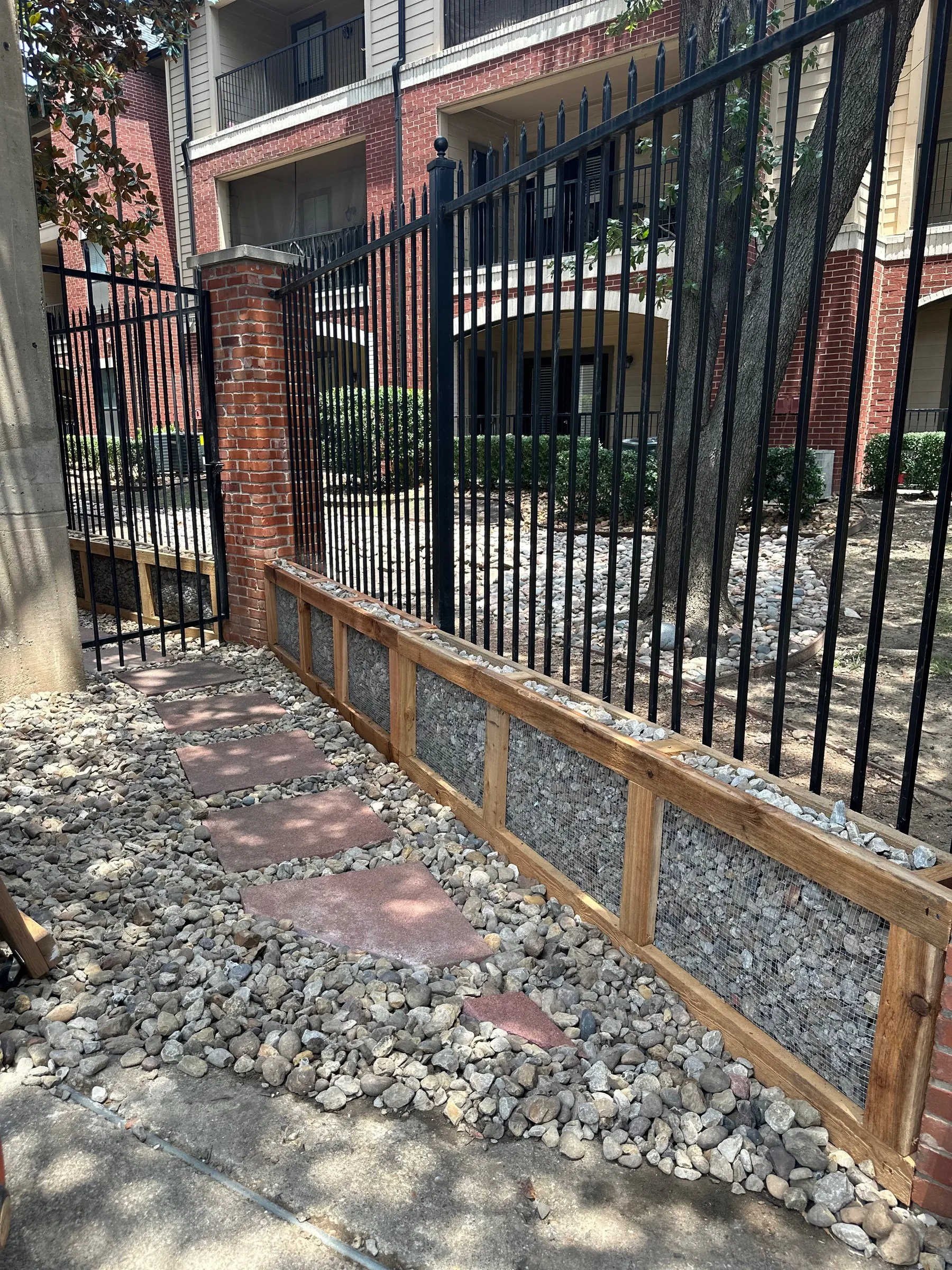
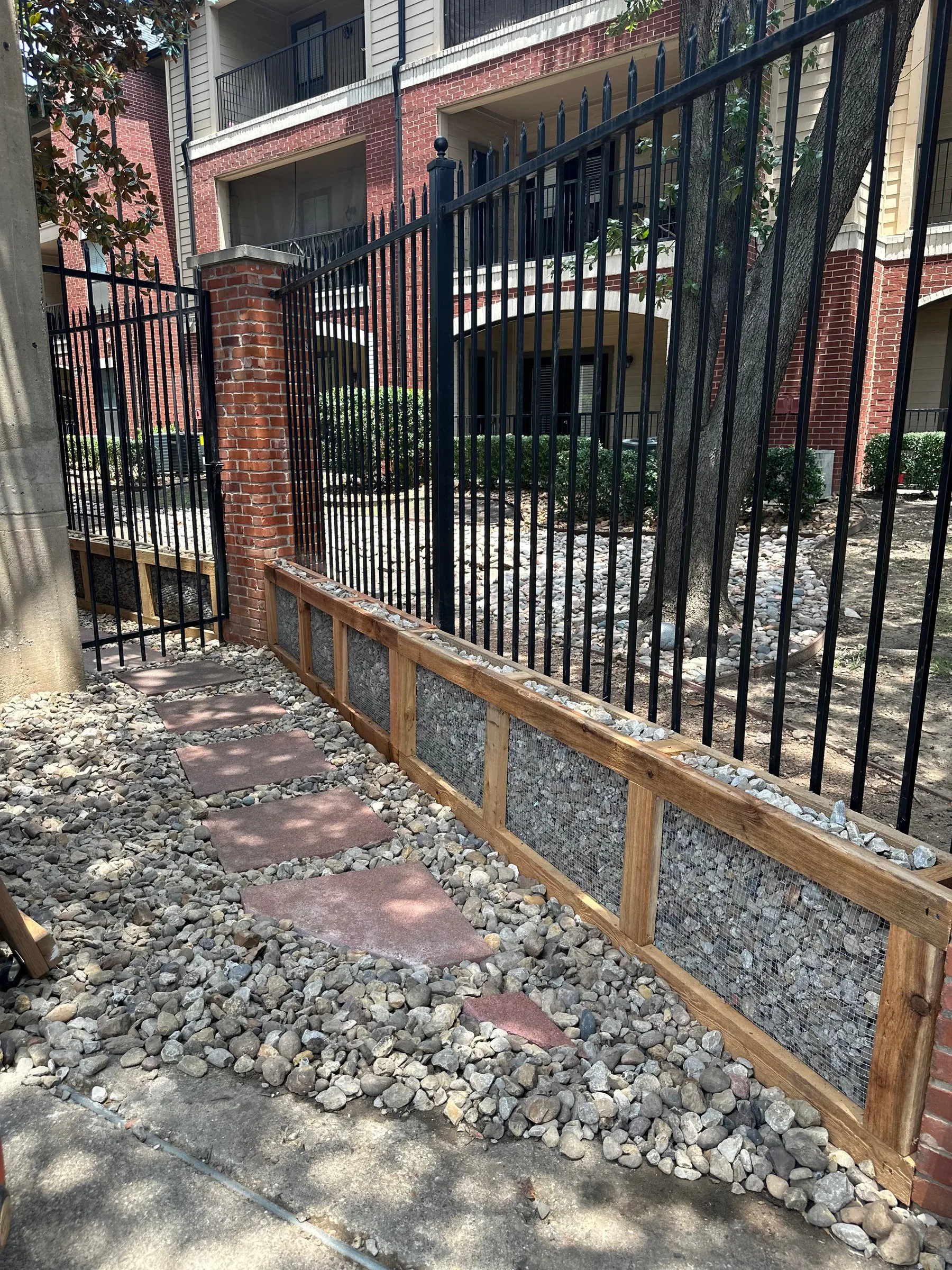
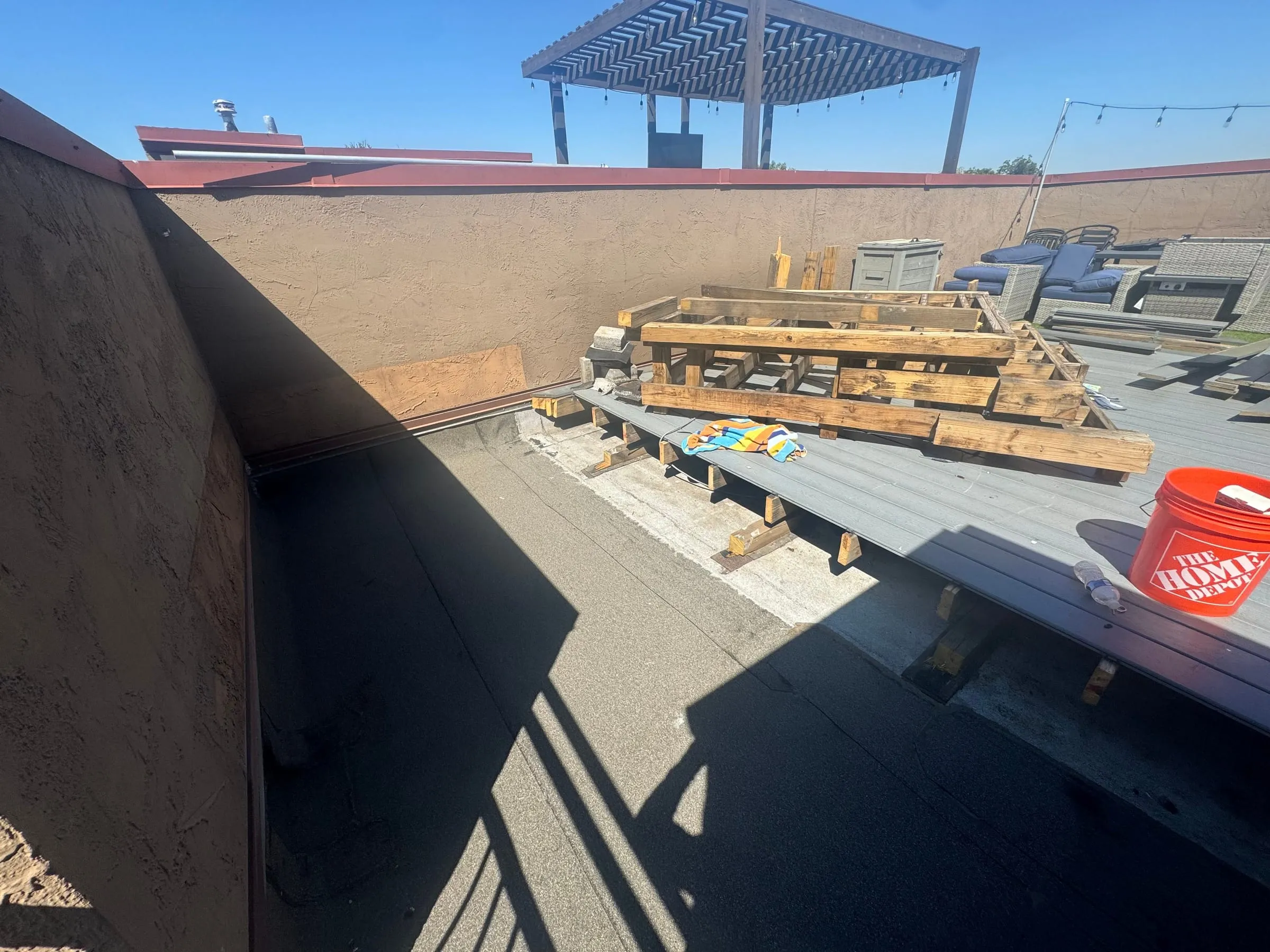
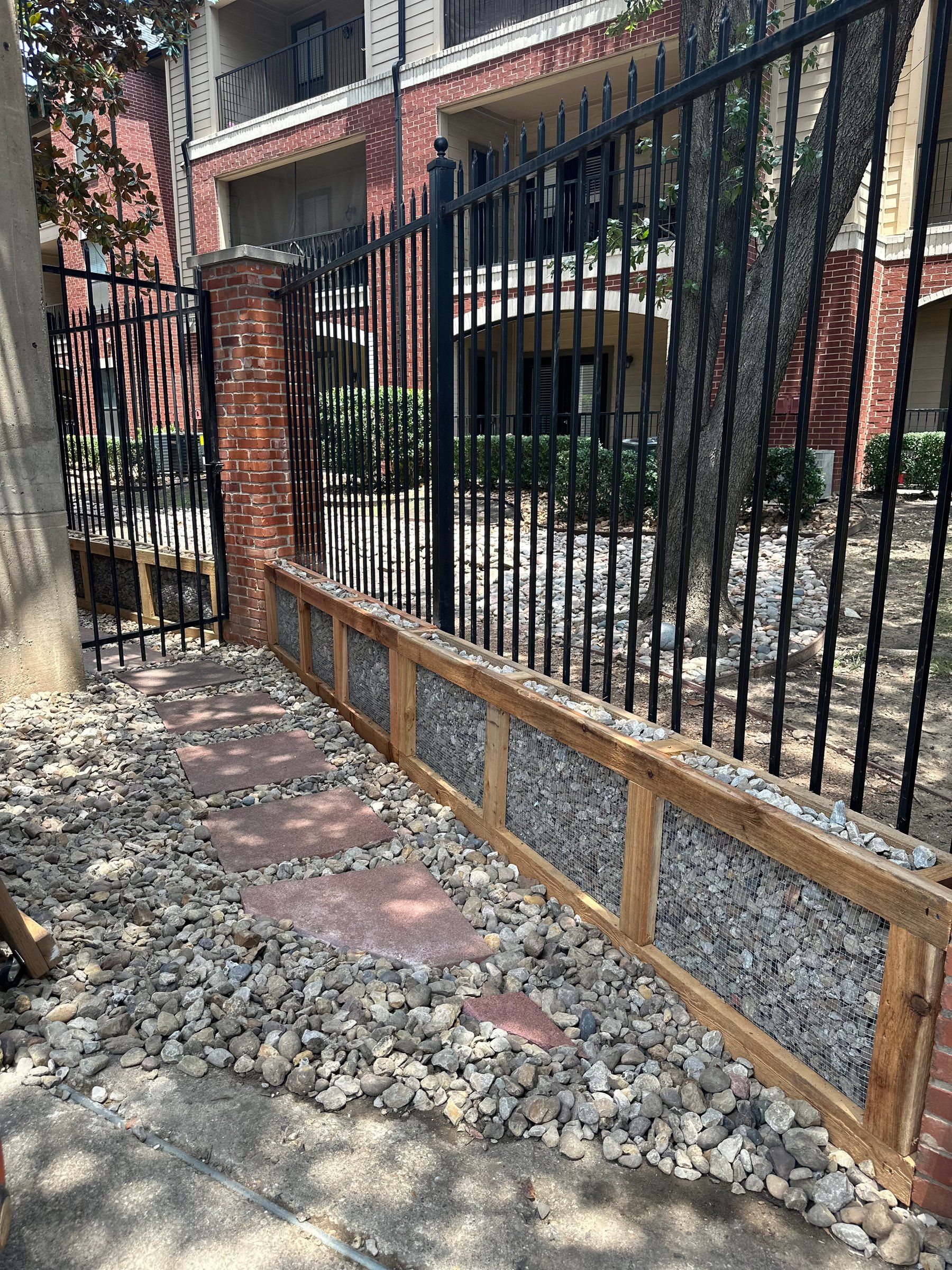
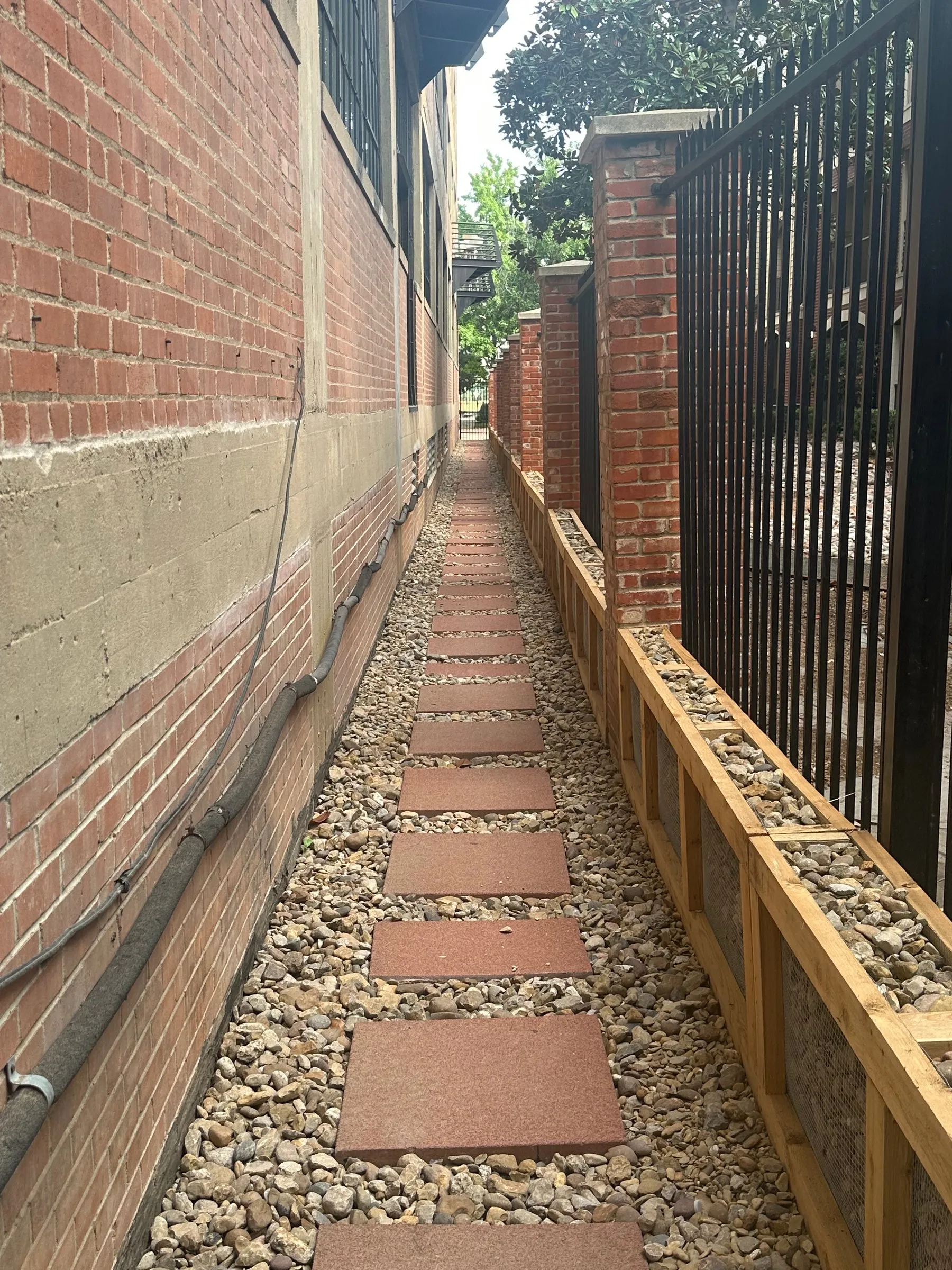
We build with interlocking concrete block, poured concrete and natural stone. Stone is close to home here: Texas quarries limestone for building stone in counties such as Shackelford and Williamson. For short garden walls under the permit line, timber-framed rock works too, like the low walls we built along a fence line on one narrow side-yard job.
- Block, poured concrete and natural stone retaining walls
- A permit and an engineer's design for walls over 30 inches
- At least 12 inches of drain gravel and a drain pipe behind block walls
- A compacted leveling pad, with the bottom course buried
- Easement and floodplain checks before we dig
- Terraced walls to step a steep slope down
Why Water Pushes Walls Over
Wet soil is heavy, and water trapped behind a wall adds pressure of its own. Irving's clay makes it worse. It takes in water fast when it is dry and cracked, then drains very slowly once it swells. A wall with no drain gravel or pipe has nowhere to send that water, so it leans, bulges or cracks. Drainage is part of the wall, not an extra.
Over 30 Inches? Plan for a Permit
In Irving, a wall with more than 30 inches of exposed face, or one holding up extra load, needs a permit and an engineer's design.
Get a Free QuoteSigns You Need a Retaining Wall
- Soil and mulch wash onto the patio or walk after rain
- A slope is too steep to mow or use
- An old wall leans, bulges or has cracks that keep growing
- Old timber walls are rotting or pulling apart
- Water pools at the bottom of a slope or against the house
- You want flat ground for a patio, a bed or a play area
From First Text to a Wall That Holds
Text or Call
Send a text or call. Tell us about the slope, the height you need and what the wall should do.
Height, Soil, Water
We measure the grade change, look at the soil, and trace where rain runs now and where it will go.
Permits and Plans
We check the plat for easements and ask Irving about permits. Walls over the line get an engineer's design.
Locate, Dig and Build
We call 811 at least 48 hours ahead, set the leveling pad, lay the wall and backfill with drain gravel.
Cleanup & Walkthrough
We grade so water runs around the wall, clean up and walk the finished wall with you.
What Customers Are Saying
Why Homeowners Pick S&L for Retaining Walls
Drainage in Every Wall
Drain gravel behind the wall, a pipe to carry water out, and a grade that sends most rain around it. In Irving clay, that is the difference between a wall that holds and one that bows out.
Built to Irving's Rules
We check the 30-inch permit line, the engineer rule, your easements and the flood map before we quote. That way the wall does not turn into a problem when you sell the house.
Right Material for the Height
Block, poured concrete or natural stone, matched to the height, the look and your budget. Walls that need a permit in Irving cannot be wood, so we plan the material around that.

Based in Irving, TX
Family owned & insured
What a Retaining Wall Costs
A retaining wall is priced by the job. A short garden border costs far less than a tall wall holding back a real slope. We measure the run and give you a free quote before any work starts.
Height matters most in Irving, because a wall with more than 30 inches of exposed face adds a permit and an engineer's design to the job. Length, material, drainage and access for equipment drive the rest. Ask about our discounts for seniors, first responders and military.
What Affects the Cost
- Height, and whether it crosses Irving's 30-inch permit line
- Length of the wall, and any corners, curves or steps
- Material: block, poured concrete or natural stone
- Drain gravel, drain pipe and base work the soil needs
- Engineering, permit fees and access for equipment
Dallas-Fort Worth
We are based in Irving and build retaining walls across Dallas-Fort Worth. See your city on the list? Send a text or call for a free quote.
Recent Outdoor Living Jobs
Related Services
- Shade · Cedar or Aluminum
Pergolas
Custom pergolas that add shade and a spot to sit, built for the North Texas sun and wind.
- Pavers · Flagstone · Concrete
Patios & Pavers
Paver, flagstone and stamped concrete patios on a deep, compacted base built for Irving's clay soil.
 Pavers · Flagstone · Stone
Walkways
Paver, flagstone and stepping-stone walkways that replace a muddy, worn path and stay level in our clay.
Retaining Wall Questions
Straight answers to what Irving homeowners ask us before they build a retaining wall. Do not see yours? Send a text or give us a call.
Still Have Questions?
Send a text or give us a call. We are happy to talk through your project.
Call (469) 340-2030Do I need a permit for a retaining wall in Irving?
Yes, if the wall shows more than 30 inches of exposed face, or if it holds up extra load (a surcharge) at any height. Irving issues retaining walls their own permit, separate from other work. Lower walls with nothing pushing on them are exempt from the permit, but they still have to be built right. If your wall is close to the line, we ask the city before we build.
Do I need a structural engineer to build a retaining wall?
Irving's building code says retaining walls are to be designed, inspected and approved by a registered structural engineer. Every wall that needs a permit falls under that rule. For a short garden wall under the permit line, ask the city whether it expects an engineer too. On an engineered wall, we build to the engineer's plan.
Do you need drainage behind a 2-foot retaining wall?
Yes. Even a short wall holds back wet, heavy soil, and rain soaks into the clay behind it. Industry guidance for block walls calls for at least 12 inches of free-draining gravel behind the blocks and a drain pipe at least 3 inches wide. We also shape the ground so most rain runs around the wall, not into it.
How deep should a retaining wall be buried?
For a block wall, industry guidance calls for a compacted leveling pad at least 6 inches thick. The bottom course should be buried at least 6 inches, and deeper as the wall gets taller. An engineered wall follows its engineer's design. Burying the base also helps the wall ride out the soil's seasonal swelling and shrinking.
Can I build a wood retaining wall in Irving?
Only a short one. Irving does not allow wood for any retaining wall that needs a permit, which means walls over 30 inches of exposed face or walls holding up a surcharge. For low garden walls and borders, timber can work. For anything taller, we use block, concrete or stone.
Can a retaining wall go in an easement?
Usually not. The City of Irving does not allow permanent structures on easements, and nothing that could block water may sit in a dedicated drainage area. Your plat shows the easements on your lot, and we check it before we lay out the wall.
Do I need to call 811 before building a retaining wall?
Yes. Texas law says to notify the 811 center at least 48 hours before you dig, not counting weekends and holidays. Utility owners then mark their buried lines. Marks only last so long, so we refresh the request if a job runs long.
Are retaining walls expensive to build in Irving?
Height drives the cost. A low border is a modest job. A wall over 30 inches of exposed face adds a city permit and an engineer's design, plus more block, gravel and digging. There is no set price, so we measure the run and give you a free quote. Ask about our discounts for seniors, first responders and military.
Need to Hold Back a Slope?
Send a text or call (469) 340-2030. We will look at the slope, check the rules for your lot and get you a free quote for a retaining wall.
- Free quotes
- Insured
- Family owned